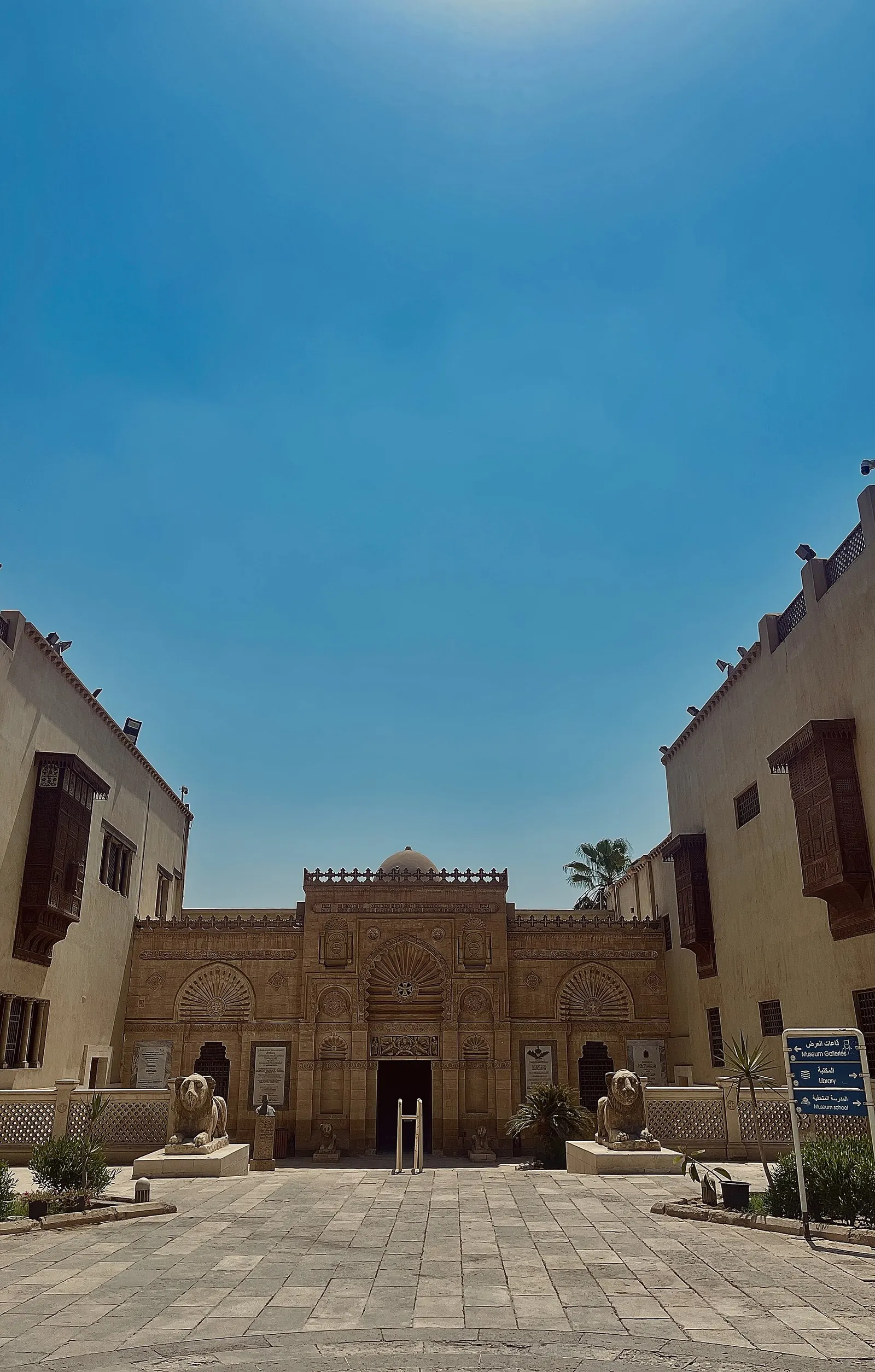
The Coptic Museum did not emerge simply because a state decided to fill a chronological gap. Its creation is closely associated with Marcus Simaika Pasha, Coptic community institutions and a campaign to preserve material dispersed among churches and monasteries.
LATE NINETEENTH CENTURY
Fragments entered more than one system.
Christian antiquities from Egypt were collected by churches, monasteries, antiquities officials and foreign museums. Some were transferred to the Egyptian Museum, where a Coptic section was organized, but this did not resolve questions of preservation, representation or setting. Architectural fragments were especially vulnerable when historic buildings were repaired or altered.
Marcus Simaika, a public figure active in Coptic communal affairs and heritage preservation, argued for a dedicated museum. His role was central, but the project depended on negotiation with the Coptic Patriarchate, donors, clergy and state antiquities authorities.
1908–1910
A foundation beside the Hanging Church.
The museum was established in 1908 on land made available by the Coptic Orthodox Patriarchate in Old Cairo and opened in 1910. Its location mattered: it stood within a historic religious landscape rather than in the newer governmental quarter occupied by the Egyptian Museum.
Collections grew through gifts, purchases and transfers. That growth created a new category of public heritage while raising enduring provenance questions: which church or monastery did an object come from, under what circumstances did it move, and how fully was that movement recorded?
- 1908 Institutional foundation.
- 1910 Museum opens to visitors.
- 1931 Administration passes to the Egyptian state.
- 1947 Important Coptic holdings transfer from the Egyptian Museum.
ARCHITECTURE AS CURATION
The building taught visitors how to see.
Later expansion produced the museum complex known today. Mashrabiyya screens, carved ceilings, fountains, courtyards and reused architectural elements create an environment that evokes historic domestic and ecclesiastical forms. This is not a neutral shell. It joins objects from different places and dates into a designed atmosphere of Coptic heritage.
The architecture made a powerful case for continuity and cultural distinctiveness. It can also blur the boundary between original context and museum reconstruction, which is why inventory records and labels remain essential.
NATIONAL AND COMMUNITY HERITAGE
The institution carries overlapping identities.
When state administration took over in 1931, the museum became part of a national antiquities framework while retaining its close association with Coptic history and Old Cairo. Transfers from the Egyptian Museum in the 1940s consolidated its position as the principal collection in its field.
Its historical importance lies not only in preserving manuscripts, textiles, wood, metal and stone. The museum helped position Coptic material as integral to Egyptian history, while its community origins complicate any simple story of top-down national collection.
Source note
Dates follow institutional accounts and scholarship on Marcus Simaika and Coptic heritage preservation. Collection histories can be incomplete; object-level provenance should be checked against catalogues rather than inferred from the museum’s general history.