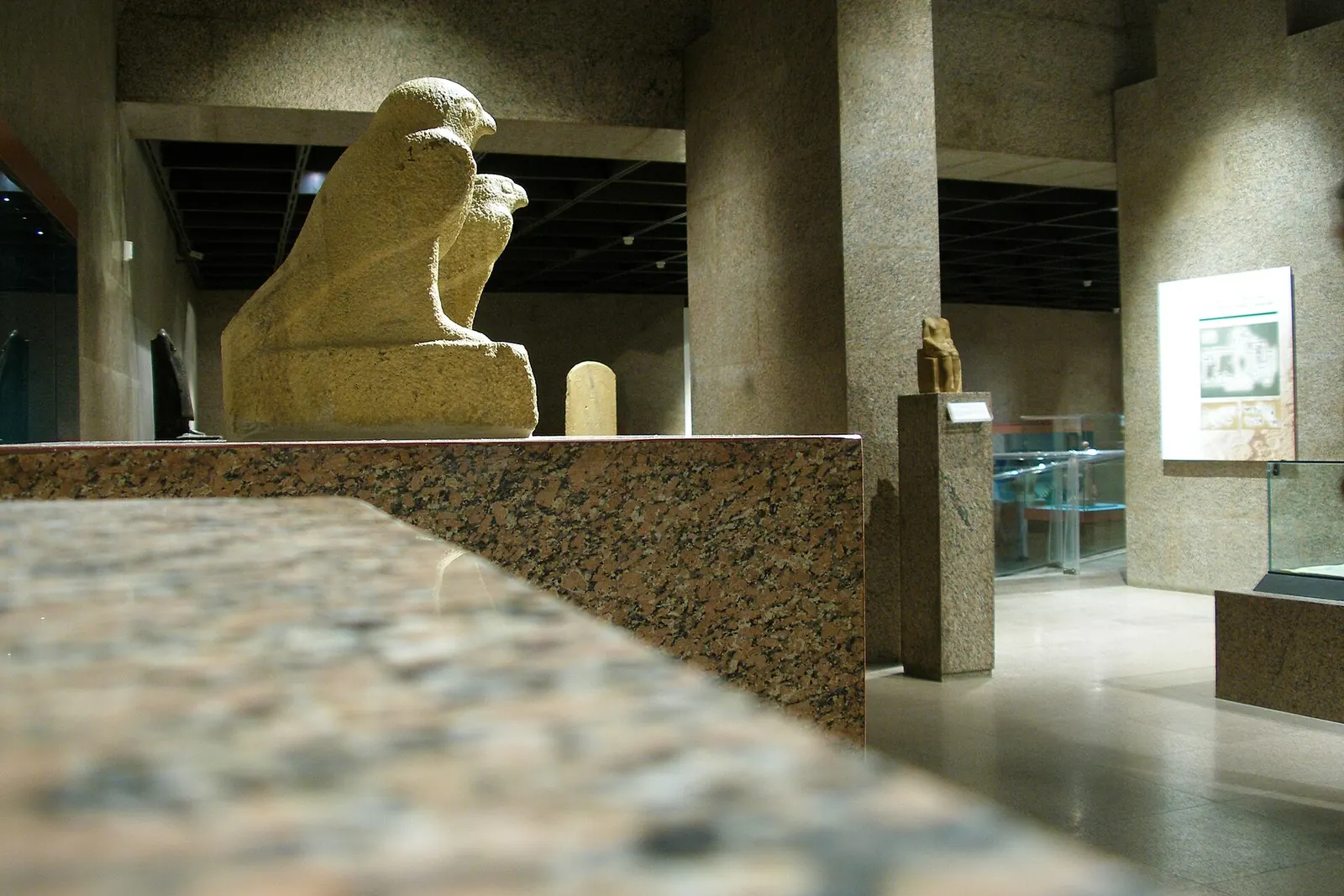
The Nubian Museum’s history begins outside its walls. The construction of the Aswan High Dam prompted an international campaign to document and move endangered heritage, while Nubian communities experienced a profound loss and remaking of inhabited place.
1960s · AN INTERNATIONAL CAMPAIGN
Rising water reorganized archaeology.
Egypt and Sudan appealed for international assistance as dam construction threatened sites in the Nile valley. UNESCO’s campaign, launched in 1960, coordinated funding, survey, excavation and the relocation of major monuments. Abu Simbel became its most visible achievement, but the work also produced enormous archives and collections from less monumental sites.
The language of “rescue” must be used carefully. Archaeology and engineering preserved structures and records, but they could not preserve the entire cultural landscape in place. The creation of Lake Nasser submerged settlements, fields, routes and cemeteries, while tens of thousands of Egyptian and Sudanese Nubians were resettled.
FROM CAMPAIGN TO MUSEUM
Excavated material needed a regional home.
The rescue campaigns generated objects, documentation and a clearer public awareness of Nubia’s long history across present-day southern Egypt and northern Sudan. Plans for a museum in Aswan offered a way to interpret that material near the transformed landscape rather than absorb it entirely into Cairo collections.
UNESCO supported the museum project in cooperation with Egyptian authorities. The building, designed by Egyptian architect Mahmoud El-Hakim, used local stone and terraced landscape to respond to its Aswan setting. It opened in 1997.
- 1960 UNESCO’s international Nubian campaign begins.
- 1960s Excavation, documentation and monument relocation accelerate.
- 1997 Nubian Museum opens in Aswan.
A LONGER NUBIAN HISTORY
The story could not begin with the dam.
The museum organizes material across prehistory, ancient Nubian kingdoms, interactions with Egypt, Christian and Islamic periods, and recent cultural life. This long chronology challenges the habit of treating Nubia only as Egypt’s southern margin or as the scenery around rescued temples.
Yet every chronological museum makes boundaries. Terms such as Nubia and Kush describe changing geographies and political formations. Modern national borders do not map neatly onto ancient or community histories, and a single institution cannot speak for every Nubian experience.
LIVING HERITAGE IN A MUSEUM
Display can preserve and simplify at once.
Architectural models, clothing, jewellery, basketry and domestic material help extend the museum beyond archaeology. They can document practices and memory, but the gallery label “traditional” risks freezing culture in an idealized past. Nubian communities continue to change, create and debate identity after displacement.
The museum’s historical importance lies in the tension it holds: international and local, archaeological and ethnographic, ancient and contemporary, preservation and loss. A critical history does not resolve that tension. It makes it visible.
Source note
Core references include UNESCO records of the International Campaign to Save the Monuments of Nubia, institutional museum histories and scholarship on Nubian displacement. Monument statistics alone cannot represent community experience; oral and community histories are essential complementary sources.